Your next step to growth comes with free delivery on orders £39 and up.

Dopamine Nation: Tricking Your Brain into Doing Hard Things (Dopamine Detox)
(Inspired by Dr Anna Lembke’s book, Dopamine Nation: Why Our Addiction to Pleasure Is Causing Us Pain)
You ever feel like your brain’s playing tricks on you? Like one minute you’re focused… and the next, you’re three hours deep into snack wrappers, YouTube shorts, or online shopping in Temu – which you didn’t even mean to open?
You’re not alone. The truth is, we live in what Dr Anna Lembke calls a “Dopamine Nation” – a world overflowing with instant rewards. Every swipe, scroll, and click is another micro-dose of pleasure.
The problem? Our brains weren’t built for this much fun.
When pleasure becomes constant, the balance breaks. That’s where self-binding comes in – a simple but powerful way to stop your brain from hijacking your focus, your time, and your sense of control.
If you haven’t watched the companion video yet, you can check our Dopamine Detox video on YouTube or watch it below.
If you like this type of content, and would like to watch our future videos, please subscribe to the Hey Mindset Matters YouTube channel and ring the notification bell so you’re notified the each time we drop a new video.
What is Self-Binding?
In her book Dopamine Nation: Why Our Addiction to Pleasure Is Causing Us Pain, Stanford psychiatrist Dr Anna Lembke explains that every time we seek pleasure, our brain releases dopamine – the “feel good” neurotransmitter.
But here’s the twist: dopamine spikes during the anticipation of pleasure, not the pleasure itself.
That means it’s not the cookie that hooks us… it’s thinking about the cookie.
When we overindulge – whether it’s scrolling social media, binge-watching, or snacking – the brain compensates by lowering dopamine levels, leaving us feeling flat, bored, and craving more.
Self-binding is the antidote. It’s not about punishing yourself – it’s about outsmarting your impulses by setting boundaries before temptation starts.
Think of it as installing speed bumps on the road to your next bad decision.
The Three Types of Self-Binding
1. Physical Self-Binding – Control the Access
Move temptation out of reach before it gets you.
Try this:
- Leave your phone in another room during work or study.
- Keep snacks or sweets off your desk.
- Log out of Netflix or social apps after each use.
When you make something harder to reach, your future self has time to come to its senses.
2. Chronological Self-Binding – Control the Timing
Give yourself permission to indulge – but only at specific times.
Try this:
- Check messages only during set windows (say, 12 PM and 6 PM).
- Save your favorite treat or show for the weekend.
- Schedule a “dopamine window” – time when you can scroll guilt-free.
This keeps your dopamine system balanced and turns pleasure back into a reward, not a reflex.
3. Categorical Self-Binding – Control the Context
Avoid environments that make temptation automatic.
Try this:
- No phones in bed.
- No eating in front of screens.
- No “just one video” while working.
Your environment shapes your behavior more than motivation ever could. By changing your surroundings, you change the script.
Why Self-Binding Works
Self-binding isn’t about superhuman discipline – it’s neuroscience-backed self-awareness.
Dopamine surges aren’t the enemy; they’re the system. What gets us stuck is how easily we can access those hits.
By limiting access, you teach your brain to rediscover real pleasure – not the instant kind that fades in seconds, but the deeper satisfaction that comes from doing, creating, and connecting.
In other words: You don’t fight dopamine – you train it.
Practical Challenge – Test It This Week
Want to test your own dopamine habits? Try one of these self-binding experiments for seven days:
- Phone-Free Hour: Keep your phone in another room for one hour each day.
- Digital Sunset: No screens one hour before bed.
- Earn the Hit: Finish one important task before doing anything pleasurable.
- Social Window: Only check social apps during one 30-minute block.
- Trigger Swap: Replace a dopamine habit (like scrolling) with a neutral one (like stretching or journaling).
Write down what changes – your focus, your mood, your energy. You’ll be surprised how quickly your brain rebalances when it gets a break from constant hits.
Recommended Reading
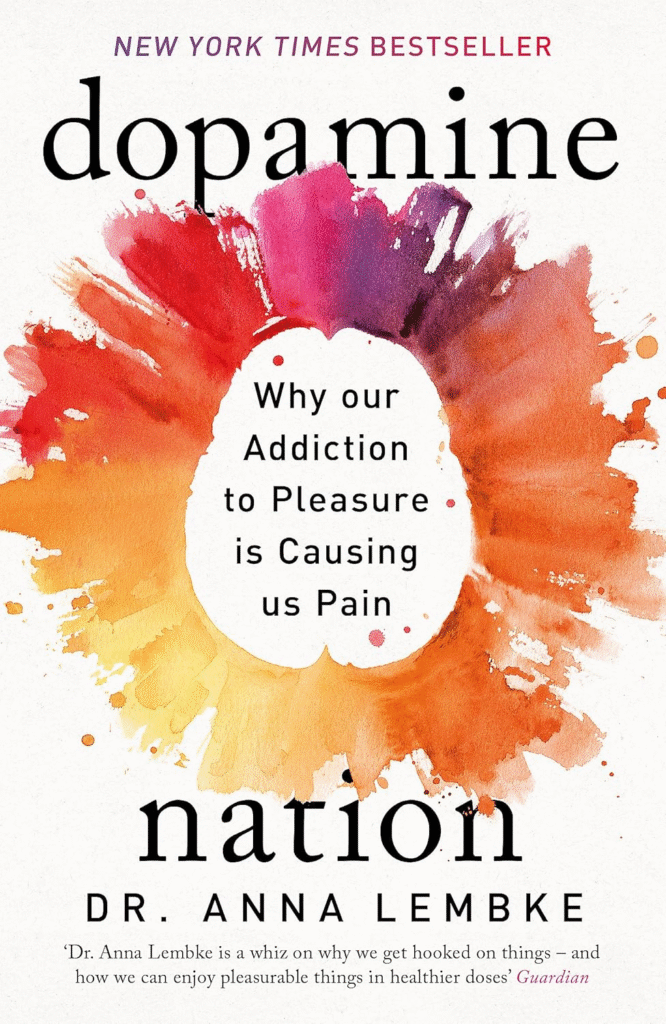
If you want to dig deeper into the science behind dopamine, pleasure, and balance, check out:
Dopamine Nation: Why Our Addiction to Pleasure Is Causing Us Pain
by Dr Anna Lembke (Author)
👉 Buy “Dopamine Nation: Why Our Addiction to Pleasure Is Causing Us Pain” on Amazon (this paid link supports the channel, but doesn’t cost you anything extra)
This book is a fascinating look at how modern life has rewired our reward system — and how to reset it through balance, not abstinence.
Final Thoughts
We all crave pleasure – that’s human. But when pleasure becomes the default, it stops feeling good.
Self-binding isn’t about restriction – it’s about freedom. It’s giving yourself the space to enjoy things again, rather than needing them to feel okay.
So next time you catch yourself lost in the scroll, remember: you don’t need to get stronger – you just need to get smarter than your dopamine.
Stay curious. Stay balanced. And keep building a mindset that matters.
Other articles of interest…
- The Secret Motivational Trick – Let’s Hack the Formula
- How to Finally Stop Procrastinating: Five Psychology-Backed Strategies That Actually Work
If you’re seeking a low dopamine treatment, then a Dopamine Detox or a Dopamine Fast may be of interest – find out more about how you can manage your Dopamine hormone levels in a manageable way by watching our companion YouTube video or even subscribe to the Hey Mindset Matters channel.