Your next step to growth comes with free delivery on orders £39 and up.

How to Finally Stop Procrastinating: Five Psychology-Backed Strategies That Actually Work
You know that feeling – sitting in front of a task, knowing exactly what you need to do, but somehow… not doing it? The dishes suddenly matter. The inbox needs “sorting.” The couch feels magnetic.
Procrastination isn’t about laziness. It’s a coping strategy. It’s our brain’s way of managing discomfort – the fear of failure, overwhelm, or perfectionism. But once we understand the mechanisms behind it, we can start to reverse them.
This guide takes inspiration from How to Be Miserable by Dr. Randy J. Paterson – a book built on clever reverse psychology. Just like in our video, we’ll flip the classic procrastinator’s playbook on its head. Each “tactic” of procrastination becomes an actionable strategy for momentum and focus.
If you haven’t watched the companion video yet, you can watch it below or check it out on YouTube here: Watch ‘How to be the Ultimate Procrastinator – 5 Guaranteed Tactics to Never Get Anything Done’ on YouTube.
If you like this type of content, and would like to watch our future videos, please subscribe to the Hey Mindset Matters YouTube channel and ring the notification bell so you’re notified the each time we drop a new video.
Why We Procrastinate
According to cognitive and behavioral psychology, procrastination isn’t a failure of willpower – it’s a learned avoidance response. When a task triggers anxiety, uncertainty, or perceived threat, our brain seeks relief through distraction.
Dr. Paterson explains that many of our unhelpful habits (procrastination, perfectionism, avoidance) are actually attempts to reduce short-term discomfort. Unfortunately, these same strategies amplify long-term stress and guilt.
The good news? If you can learn avoidance, you can unlearn it. By reversing the mental patterns that maintain procrastination, you can rebuild trust with yourself – one action at a time.
The Five Reversals: Turning Procrastination Inside Out
1. From Monumental Tasks to Manageable Steps
The original trap: thinking only about the final, impossible outcome.
When your brain sees the entire project at once – the full report, presentation, or proposal – it triggers a stress response. The task feels unsafe, so you freeze.
Reverse it: break it into visible, winnable micro-steps.
- Define your next actionable step, not the whole project.
- Write it down where you can see it.
- Aim to start, not to finish.
Every small win lowers the “activation energy” your brain needs to engage. Consistent, small progress signals safety – and momentum builds naturally.
2. Replace “Later” With a Time and Place
The original trap: “I’ll do it when I feel motivated.”
Motivation rarely precedes action; it follows it. Waiting to feel ready guarantees you’ll stay stuck in “later.”
Reverse it: schedule your work.
- Pick a time and location – even 15 minutes counts.
- Treat that slot like an appointment with someone important: yourself.
- Use a visible timer (Pomodoro-style blocks work well).
Action creates clarity, and clarity fuels motivation. When you decide “when,” you remove the brain’s loophole for delay.
3. Trade Perfectionism for Progress
The original trap: believing the first attempt must be flawless.
Perfectionism disguises itself as high standards but functions as fear of failure. When nothing feels “good enough,” you protect yourself from judgment by never finishing.
Reverse it: lower the bar to finished, not perfect.
- Commit to a “draft mindset.”
- Separate creation from correction – don’t edit while writing.
- Remember: done is feedback-ready. Perfect is invisible.
Progress, not perfection, is the foundation of growth. Each imperfect attempt is a data point your brain uses to improve confidence and skill.
4. Design for Focus, Not Distraction
The original trap: multitasking your way into chaos – 15 open tabs, constant notifications, and background noise.
Your environment silently programs your attention. Each alert, ping, and tab-switch fractures focus and drains working memory.
Reverse it: create intentional boundaries.
- Silence notifications and put your phone out of sight.
- Use full-screen mode or focus apps.
- Keep one workspace clean and consistent.
Distraction thrives in clutter; focus thrives in simplicity. Build an environment that makes procrastination inconvenient.
5. Shift From Avoidance to Emotional Awareness
The original trap: fixating on discomfort – dread, boredom, or frustration – and avoiding it at all costs.
When we focus only on how a task feels right now, we disconnect from its long-term benefit. The result is chronic avoidance reinforced by temporary relief.
Reverse it: connect emotionally with the outcome, not the discomfort.
- Ask: Why does this matter to me?
- Visualize the relief or pride of completion.
- Name the emotion you’re avoiding (“I feel anxious,” “I feel uncertain”) and start anyway.
Emotional awareness transforms tasks from threats into choices. The discomfort of starting becomes manageable – and temporary.
Why This Works
Each of these reversals targets a different layer of the procrastination cycle: overwhelm, indecision, perfectionism, distraction, and avoidance. Together, they retrain your brain to associate starting with safety, not danger.
This is “reverse misery” – identifying the habits that create unhappiness and flipping them into their positive opposites. When you stop doing what reinforces stress, productivity naturally follows.
The Practical Exercise: The Anti-Procrastination Blueprint
Grab a notebook and make five columns – one for each reversal.
| Reversal | What I Usually Do | My Opposite Action | Time to Try It | Result / Reflection |
| Break down tasks | Think about the whole project | Write one step | Today | |
| Schedule time | Wait for motivation | Block 15 mins | ||
| Embrace imperfection | Rewrite endlessly | Submit a rough draft | ||
| Remove distractions | Keep phone nearby | Phone in another room | ||
| Emotional awareness | Avoid discomfort | Name it and act |
Check one reversal per day. Track how your energy, focus, and mood shift after two weeks.
Final Thoughts
Procrastination isn’t a moral flaw – it’s an emotional strategy that’s outlived its usefulness. When we reframe it as a signal instead of a failure, we gain the power to change it.
Beating procrastination isn’t about forcing discipline; it’s about creating safety, clarity, and trust with yourself. Small wins compound. Start small, start messy, but start.
Your future self will thank you for every imperfect beginning.
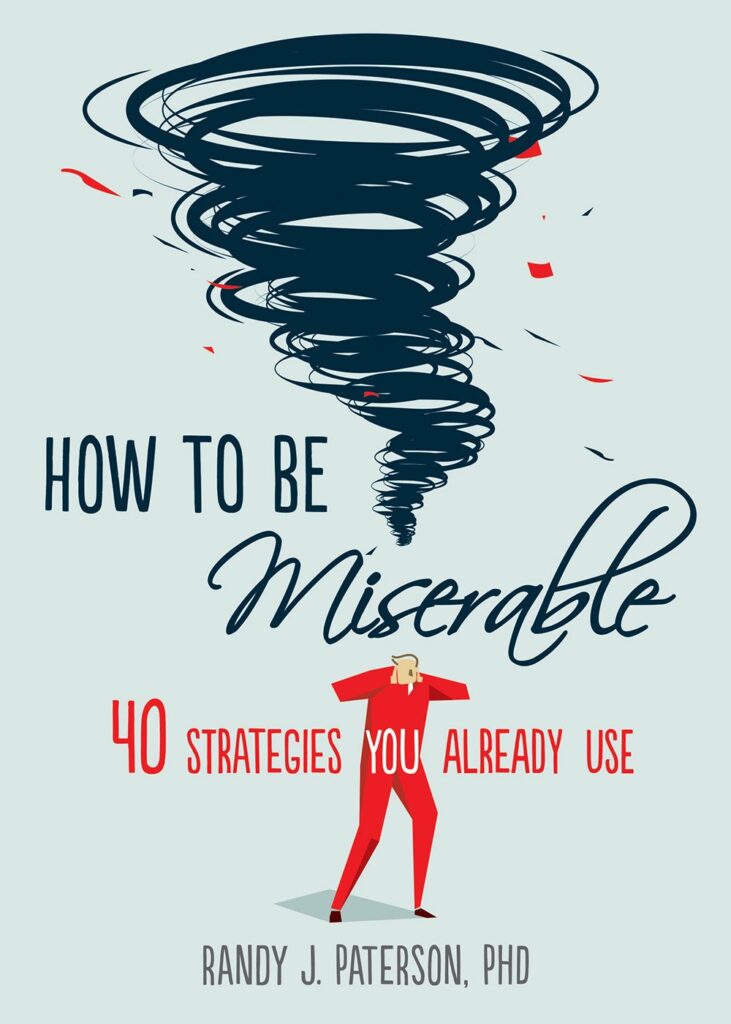
How to Be Miserable: 40 Strategies You Already Use by Randy J. Paterson PhD
In How to Be Miserable, psychologist Randy Paterson outlines 40 specific behaviors and habits, which—if followed—are sure to lead to a lifetime of unhappiness. On the other hand, if you do the opposite, you may yet join the ranks of happy people everywhere!
Buy ‘How to Be Miserable: 40 Strategies You Already Us’ on Amazon (this paid link supports the website, but doesn’t cost you any more).