Your next step to growth comes with free delivery on orders £39 and up.

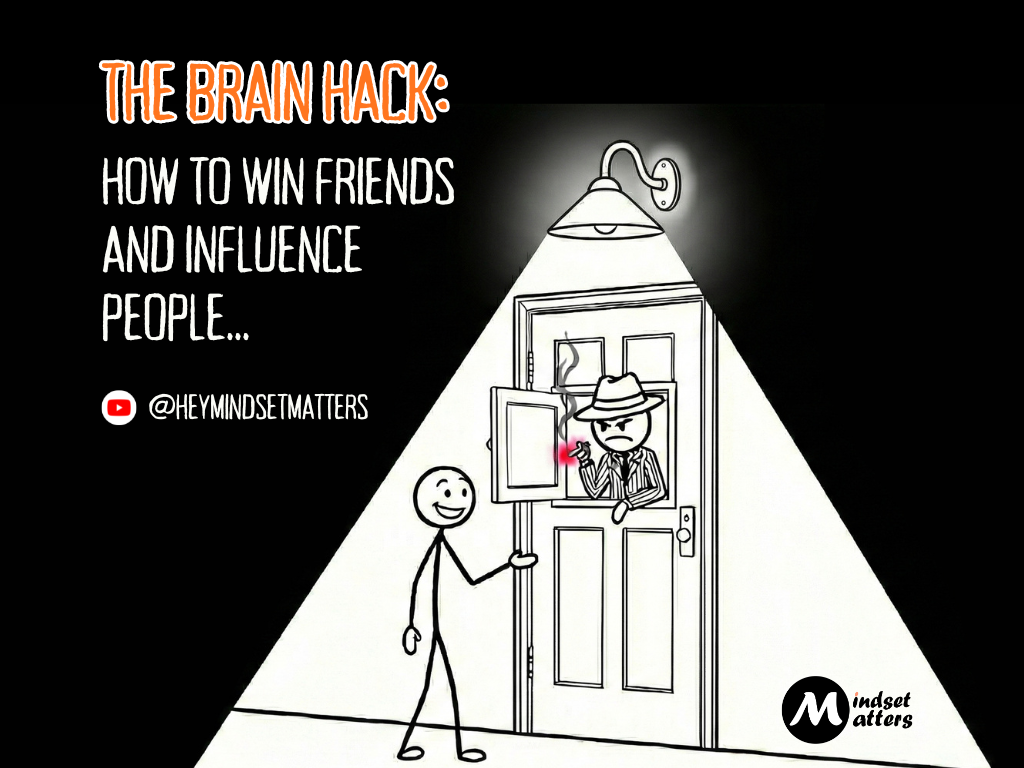
The Psychology of Persuasion: How to Influence Anyone by Understanding the Brain
When we examine our own thought processes during a high-stakes negotiation or a tense conversation, we often realize we are relying entirely on our own logic. We build an airtight case and expect the other person to simply accept our rationale. Yet, as we observe the subtle shifts in human behavior, we frequently encounter a brick wall where logic seems to completely die. The person across from us shuts down before we even finish our introduction.
If you are interested in the deeper Behavioral Science behind why this happens—and how to navigate it—you are engaging in a crucial level of self-reflection. Since 1936, Dale Carnegie’s book How to Win Friends and Influence People has acted as a manual for social engineering. By stripping away the 1930s politeness and looking at these concepts through the lens of modern neuroscience, we can uncover the Persuasion Techniques that actually work.
If you haven’t watched the companion video yet, you can watch it below or check it out on our YouTube channel here: Watch ‘3 Psychological Tricks That Make You More Convincing’ on YouTube.
If you like this type of content, and would like to watch our future videos, please subscribe to the Hey Mindset Matters YouTube channel and ring the notification bell so you’re notified each time we drop a new video.
Why Logic Fails: Overcoming Psychological Reactance
When we push our ideas onto someone else, we often trigger a defensive mental block. Carnegie famously advised that the best way to win an argument is to avoid it entirely. While this might sound soft for modern business, there is a profound structural reason for this rule: Psychological Reactance.
When individuals feel pressured or cornered, their brain triggers a mental security protocol. To reassert their autonomy and freedom to choose, they will frequently do the exact opposite of what you want.
If we want to create Subconscious Influence, we have to recognize that arguing triggers this inner rebel, making the other person anchor to the floor and reject our ideas.
Strategy 1: Genuine Interest and the Neurology of Names
To bypass defensiveness, we must establish Ethical Influence through authentic connection. Carnegie’s foundational law is to take a genuine interest in other people. He noted that a person’s name is the sweetest sound in any language, and modern neuroscience backs this up.
Hearing your own name triggers unique activity in the brain’s reward regions, specifically the ventral striatum. By utilizing someone’s name naturally, you signal that you see them as a human being rather than a transaction.
Furthermore, replacing cheap flattery with honest, sincere appreciation releases oxytocin, which fundamentally strengthens the social bond and builds trust at a neurological level. Another powerful principle from Carnegie’s work is to “arouse in the other person an eager want.” By stepping out of our own perspective and seeing things from the other person’s point of view, we align our goals with their internal motivations.
Strategy 2: The Self-Persuasion Effect and The Scale Technique
The ultimate shift in our communication framework comes from realizing that people are rarely convinced by your arguments; they are convinced by the arguments they generate themselves. When we tell someone why an idea is good, they remain skeptical. When they say it themselves, they believe it completely.
To facilitate this, we can use a method known as The Scale Technique to build Compliance Momentum.
How to Apply the Scale Technique:
- Instead of delivering a pitch, ask the person to rate their confidence in a project or idea on a scale of 1 to 10.
- If they respond with a moderate number, like a six, do not argue or tell them why it should be a ten, as this challenges their autonomy.
- Instead, ask them: “Why is it a six and not a two or a three?”.
- To answer, they must articulate their own logic and list the reasons why they are confident in the idea.
- They transition from defending against your pitch to literally building your case using their own words.
When you become a good listener and allow the other person to talk about their own ideas, it activates the reward centers in their brain, creating a chemical high known as self-disclosure.
Referenced Resources
- How to Win Friends and Influence People by Dale Carnegie. (this paid link supports the channel, but doesn’t cost you any more)
- Influence, New and Expanded UK: The Psychology of Persuasion by Robert B. Cialdini. (this paid link supports the channel, but doesn’t cost you any more)
Final Thoughts
Developing Soft Skills Training is not about manipulation; it is about clearing away the ego and noise of a conversation so mutual value can be recognized. By examining our own conversational habits, managing Psychological Reactance, and leveraging the Principles of Persuasion, we can transition from frustrating arguments to genuine collaboration. When we understand the Social Psychology of how the brain accepts information, we master the true Psychology of Persuasion.
Other articles of interest…
- Video: Want to Avoid Burnout? Start with This Pre-term Mindset Shift – two powerful mindset shifts that can help you study smarter, stay resilient, and avoid the trap of perfectionism.
- Article: The Secret Motivational Trick – Let’s Hack the Formula – Understanding the mechanics of drive.
- Video: The Secret Motivational Hack – A Mindset Shift to Increase Mental Health Motivation – Discover a powerful motivational hack that uses a simple mindset shift to boost your focus and motivation.